In this episode, we are going to dig a little deeper into the ideation stage of the think up phase of business life. We dig into the concept of value creation. The only way to sell and generate revenue from anything that is commercially viable is to create value in someone else’s life. Only then will they be willing to pay for it and you will receive value in return.
Let us drill down into the concept of Value Creation Piece. After generating an idea, evaluating and selecting it, we create value. We can create value in these different levels:
1. Utility Based Value: It can be anything that performs a function to serve a need or purpose. The need might or might not be of high value. This includes all the commodity based products and services.
2. Service Based Value: When we give something more than a product or commodity, there are services, connections and relationships attached to it. This is value creation at a different level because we have attached a product with some level of service.
3. Experience Based Value: When we create experience for our customers, team and for ourselves in the process of delivering a product or service. We should strive in every circumstance to create an environment that is memorable. It should create a connection which is experiential in perspective.
4. Value Based Creation: This is a higher level where businesses really thrive, expand and grow. It is all about how you take your product or service to not only create experience but also to speak the values of your customers and team. It requires the highest level of dedication.
Satisfaction Line
People buy with their emotions and justify with logic. But we should consider something called the satisfaction line. On one side of this line, you are enhancing value and on the other, you are eroding it.
Value Enhancing vs. Value Eroding
• Enhance Value: Deal at the unexpected needs level to bring trust and loyalty.
• Eroded Value: Understand and deal with unhappy customers. Move them across the satisfaction line.
So, think about where you create value and in the next episode, we will get into the two frameworks: Value Sectoring Framework and Value Focus Framework.
— Begin Transcript —
Hey there, I’m Mel Abraham, the author of the brand new number 1 best-selling book The Entrepreneur’s Solution and the founder of Business Breakthrough Academy, where we teach you how to design a business and create a life: A life of financial freedom and peace of mind.
And welcome back to this episode of The Entrepreneur’s Solution show and in this episode, we’re going to talk a bit about creating value. We’re still in the phases of what I talk about, the three phases of business life and everything. If you will, the Think Up phase, the Get Up phase and the Reach Up Phase.
We’re still in the Think Up phase. We’re in the Ideation phase and I’m going to go a little deeper in ideation. I’m going to talk more about how do you take that idea and create value with your customers, with your team and with yourself as we start to move forward on this.
We’re going to start right after this short introduction. Just remember that every episode comes with a guidebook or some sort of tool or some sort of template. And that you need to go to MelAbraham.com/session019 for this episode, so you can get access to that.
And if you happen to not be at your computer right now or you’re at the gym listening to this, which I know a lot of my community does that at the gym, or they are on the run, you can turn around and you can text. Text MYLEGACY one-word no-spaces 38470 and you’ll get the download link directly to your phone so you don’t forget getting access to all those tools and the things we have going for you.
So, I’m looking forward to it. We’ve had a tremendous amount of feedback, tremendous amount of questions and dialogue with many of the community out there and it’s just been a joyous journey. So, right after this introduction we’ll be right back. See you soon.
—————————————-
Hey there, welcome back. I’m Mel Abraham the author of the brand new number 1 best-selling book, The Entrepreneur’s Solution and the founder of Business Breakthrough Academy and welcome back to this episode, episode 19 of The Entrepreneur’s Solution show. In this episode, we’re going to actually talk about, we’re going to continue going down the path of three phases of business life. We are going to get through this whole framework. We’re in the second stage of phase 1: Ideation.
Remember, it’s three phases—Think Up, which is really the development of the plan and the thought process and the analysis and all the things that go into it.
Then the Get Up, this is how the structure and getting things in place, getting the actual plan in place—starting to execute and implement, how do you finance it?
And then there’s the Reach Up phase. This is where we scale. This is where we grow. This is where we bring all of the things together in a way that allows us to expand beyond ourselves. That allows us to expand the impact, allows us to expand the difference.
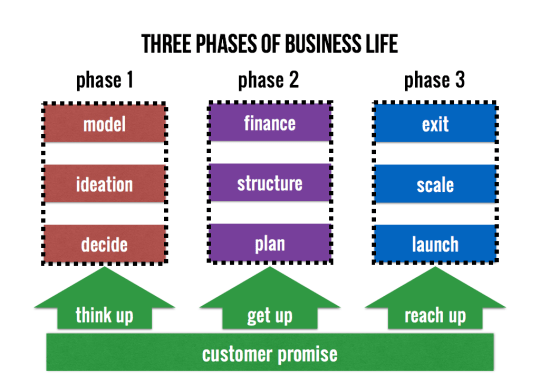
And remember that, this whole process is all about satisfying the customer promise. So, that’s what we’re dealing with and in Episode 14, episode 14 we actually talked about evaluating a selection of an idea and I gave you the framework of how to evaluate an idea—idea evaluation. I kind of talked about what are the inputs, what are the markets, what’s the outcomes and what are the obstacles that exist in there.
How do you take the idea from idea stage to business stage?
And so, this is going to build on that, it’s going to build on that and probably going to do this in two different episodes about this creating value. It is so important:
• To your business,
• To your success, and
• To your future
This concept of creating value. And so, I’m going to spend a little time just talking about it in general in the first episode. Then we will come back in another episode to talk about, more specifically, about the framework. What I call the Value Sectoring Framework that you may see on the screen here, at least a portion of it and then the Value Focus Framework and the kinds of dynamics that come into play.
So, here’s the thing to think about:
• When we’re talking about ideas,
• When we’re talking about customers,
• When we’re talking about business,
• When we’re talking about anything that is commercially viable.
That is something that we intend to sell, make money from, create revenue from. The only way, the only way that’s going happen is if you’re creating value in someone else’s life and that’s it.
Business is that simple. Create value in someone else’s life, they’ll be willing to pay for it and you will receive value in return. That’s it. Unfortunately, we live in a time and I don’t want to get on a soapbox but let me just jump on it for a moment.
We live in a time for some reason that
1. People don’t want to work hard, and
2. People feel like they’re entitled.
Well, I got news for you. You may be entitled but you think you’re entitled the wrong things sometimes. And what they’re thinking is that they’re entitled to hand outs and things like that. And I’m not saying that you are because you wouldn’t be with me on this program doing the work that you’re doing if you were of that nature. So, I totally know that I’m preaching to the choir here but understanding the dynamics and the foundation of where we’re at, I think, becomes important.
But to realize that we get paid for the value we create. And the entitlement that we should have is the entitlement to the opportunities to create value and that’s it. I think that we are living in a tremendous time of opportunity today to create value in other people’s lives so we can create commercial success.
And so that’s what this is about. When you talk about ideation, when I talked about ideation in Episode 14 we talked a little bit about this. But now, I want to kind of really dig into this concept of value creation because that’s where we really need to drill down on it because initially we get this idea—it comes in our head.
This is the, this is the entrepreneurial journey, if you will.
• We get an idea,
• We think it’s valuable,
• We evaluate it,
• We select it.
And then we got to look at how do we create value? Once we create value, we typically are going to look at the market that we can create value to and then we’re going to look at what the market feedback is when we take it out there and then we’re going to resign ourselves to some changes, some design, some re-design and then really truly launch it.
And then I think that’ s the process we’re going through and we’ll get to the market selection, the resign and re-design process in later episodes. What I want to focus on right now is this value creation piece.
And so, when we talk about value creation, there’s value. A lot of people will think of value in terms of Dollars and that’s probably the easiest most common way to understand it in the context of Dollars and Cents, or the currency whether it’s in British Pounds or Euros or anything like that—in a currency perspective.
But here’s what I invite you to think about. We can create value in different ways. For instance: We can create value in the context of what I call utility based value. Utility based value is that it serves a need; that there’s a function to what we’re doing.
So, it could be everything, anything from a paper towel or a sponge that’s there to mop up a mess that you created or maybe I created; that type of a thing. There’s utility to it. It serves a purpose, it serves a function that is a need but is it a high-value need? Maybe, maybe not! This is typically where you’re going to find commodity based types of products, services and things of that nature.
But one of the things we ought to ask ourselves
• With our idea,
• With our product,
• With our service,
• With our offering,
• With anything we’re trying to do is …
What utility does it serve? What function does it serve in someone’s life at the base, at the base level, at the base level?
Then there’s another way to look at value and that is service based value, service based value.
Are we giving them something more than just a product, a commodity that necessarily works?
• Is there some service attached to it?
• Is there some connection attached to it?
• Is there a relationship attached to it?
• Is there a community attached to it?
And now we have value creation at a different level because we’ve attached to it some level of service beyond just handing them a product or something of that nature.
And then from service based value, we go to what I call experience based value.
Are we creating an experience for our customers, for our team, for ourselves in the process of delivering this product or service?
And I would submit to you here that we want to strive in every circumstance:
• To create an experience.
• To create an environment.
• To create something that’s memorable.
• To create something that touches their heart.
• That creates a connection that’s experiential in perspective.
A very good friend of mine, Scott McKain, he wrote a book called o-gosh … All Business is Show Business and he talks about this whole concept of creating experiences for your customer. If you think about and in just your life, I’m sure that you could probably think back in the last week or two weeks, something that happened when you’re out in the world that created an experience that was truly meaningful. That you sit back and say, “That was memorable. I might do that again.”
I just, in-fact last night, was just at an event where a friend of mine was speaking and the way they, the way they greeted us from the very beginning when we parked our car, valet parked it; the way they moved us in to the room, to deliver it.
There was a process that created an experience from the very beginning to when we left and that was a wonderful process that made it really easy, really efficient but really something that is memorable because of the way it was done. So, experience based.
And then I think the higher level where I believe where businesses really thrive, really expand, really grow; it’s what a call a value based creation.
How do you take, how do you take what your product, or service is? Or your offering? Or what you’re doing?
And not only create an experience for your customers but create an experience for your team, create an experience for you. But make sure that it speaks to their values at the same time.
• How can you do that?
• Can you do that?
Can you find a way to go in and say, “By using this product we’re speaking to values”? For instance, the whole green movement in construction and business and that type of thing, the whole lead certification or the green movement in … Jessica Alba’s got her company that is dealing with organic and clean products for babies and that type of thing.
That you’re speaking, that product is serving at a utility level, the base need. It’s providing some service to it. It’s creating an experience as it relates to it but it’s speaking more at the values level; that the people that are buying and working with that company, or buying their products and using their products are coming from a place of values.
• They value the green perspective.
• They value the organic nature.
• They value those things.
So by using it, we’re satisfying their values. That is the highest level of dedication. When we can speak to someone’s values, now we’ve got a relationship that is based on something, beyond some transactional situation, transactional moment where they give me cash and I give them a product or service. It’s actually transitioned and transcended the transactional to the relational at a values level.
And so, what I invite you to do is in the guidebook that you get with this is—go through some of the questions, go through some of the aspects, look at your products and services.
• How do these things serve people’s needs and values?
• What are the values that I’m serving in this process?
– Because that becomes marketing gold when you start to speak to their values.
When you think about this what I, we always talked about this concept of marketing and buying and selling and transactions and they say, “Oh, people will buy with their emotions and justify with logic and so we want to consider that”.
Here’s the thing that I don’t think we necessarily give a lot of due to, and this is how I want you to kind of think this through is: If I look at something I put down in the center. Something called the Satisfaction Line, there are words that show up:
• In your customers’ mind.
• In your customers’ heart.
• In what you are presenting.
That will move them down the satisfaction line or on the other side of the satisfaction line. On one side, you’re eroding the value. On the other side, you’re enhancing the value and we always want to enhance the value.
• We want the perception of enhanced value.
• We want to grow the value.
When we are successful at doing that, you’ll see when we start talking about the value of focus and value sectoring frameworks.
• How that transitions your customers from a commodity base to a values based customer?
• How it then allows you to transcend this concept of price and cost?
Because we’re not, we’re not focused on price or cost when we’re focused on dealing with our values. So, just at a … kind of fun to look at these things and say, “Let’s think about some of those things that your customers might be saying”, that when you hear these, you know that they’re moving you away from the satisfaction line, down. Away from the satisfaction line into a less satisfied customer which is eroding the customer relationship and the connection.
We’re going to look at those. We’ll look at some of the words that you might see when you’re enhancing that relationship and the idea here is to raise your awareness with respect to the language that should be used by yourself but more importantly the language that’s going on in the hearts and the minds of your customers. And making sure that what we’re doing is going to try to use more value enhancing language.
Bring that to bear vs. value eroding language.
Let me give you an example. So, obviously I’m going to put some of these up pretty quickly because if I’ve got a client or a customer that is feeling dissatisfied obviously that’s eroding value. That’s eroding, anything that erodes value erodes the relationship and takes that relationship away.
And as we start to reduce value, we start to reduce connection with the customer and sooner or later if we do nothing to fix it we lose the customer because someone’s going to come along and take care of the customer needs at the value level, at the value level.
You may have heard me speak before that when we talk about customer needs, we can deal with it:
• At the expectation level which is a satisfied customer.
• At the desires level which is a happy customer.
• Or at the, at the unexpected needs level which is where we want to really, truly operate.
That’s at the values level. At the unexpected needs that’s where loyalty comes in. That’s where they become evangelists
• For your mission,
• For your business,
• For your cause,
• For your products,
• For your services.
We need to always, always think that way as we move forward. So if you got a customer that’s dissatisfied, how are we going to fix that? How are we going to move them across the satisfaction line and beyond?
– By dealing with that dissatisfaction.
Disappointed, you’ve got stressed. I’m just going to put some up these up:
• Neglected.
• Confused.
• Hurried.
• Frustrated.
• Unhappy.
When this is the kind of language that you’re hearing from your customers or that’s going on in their minds or their hearts or their minds. This is the things that’s going to destroy your business and this is what we need to counteract.
What we really want to do is start to understand:
• How come they might be dissatisfied?
• How come using our products or services might be stressful?
Think about getting a new software, getting a new hardware and it’s very difficult to use the stress that comes into play with that. And if we can make that transition easier on them, so it’s seamless that, that makes … I’ll give you a for example and why I’m such an Apple fanatic is because I had a problem with an Apple computer once and they literally, they literally said … I was in the middle of getting ready for a presentation. I was going to do a presentation the next day and next you know … I know I’m preparing for it and the hard drive crashes.
And I go to the Apple store and here I am at 8 o’clock at night with a hard drive with my presentation on it and I don’t have the stuff I need on it because I was working on it. And I go to the Apple store to the genius, the genius bar.
And one of the guys says, “When do you need this?”
I said, “I got a presentation in the morning.”
And he sat down, he says, “I’ll get it fixed for you and we’ll recover all the data and we’ll make sure that this thing works. Then if I have to I will drive it over to your hotel.”
Which is what he did by [10:30] at night, He drove to the hotel with my computer in hand with it working. So, I had the opportunity to do that presentation in the morning. Had he turned around and said, “Not my problem. We’ll get it to you in a day or so.”
• I would have been dissatisfied.
• I would have been disappointed.
• I would have been stressed.
• I would have felt neglected.
• I would have been confused.
• I would have been hurried because I would have to buy a new computer.
• I would have been frustrated.
• And I certainly would have been unhappy.
And in all likelihood, I probably wouldn’t have done a whole lot more business with Apple. But now they’ve got a loyal customer because they focused on value enhancing vs. value eroding.
• So what is value enhancing?
• What is the language that we want to put in?
• What are the things that we want to portray in our messaging?
• What are the things that we want to create through our products?
One, that’s safe to work with us.
• That they feel safe.
• They feel comfortable.
• They feel at ease working with us.
• That they feel valued.
Certainly, I felt valued in that moment where he said, I got this and you’re in good hands. I felt safe in that moment. Certainly it still was uncertain because I didn’t know if he was going to recover it and I was sitting there trying to figure out what was I going to do?
Feeling energized. Think about, think about talking with your customers and saying, “Working with us and working our systems, our services, our products are going to energize you. They’re going to boost you as you move forward.”
Feeling cared for. This is something that we used at the Karate school. In fact, I said to the instructors, we talk through what it is we were really selling. And this was the actual product I wanted them to focus on was that through the martial arts, we wanted the children and the families to feel cared about vs. just teaching martial arts.
It’s easy to teach martial arts. I could teach you the techniques and we could be all set and done. But when you approach it from the perspective of saying, “I’m going to teach you the martial arts but in the process I want to make sure that you feel cared about”.
Now,
• We’ve dealt again at the unexpected needs level.
• We’ve dealt it again at their values level.
• We’ve created loyalty.
• We’ve create connection.
• Our customer retention went way up, and
• The word-of-mouth went way up.
So, thinking about how that plays in; trusting, bringing trust into that relationship and doing what you can to make sure that they trust what it is that you’re providing for them.
Then excitement, I mean something new. You’ve got something that is exciting or they get excited about it. That kind of energy, that kind of contagiousness that your customers will have is really, really contagious so,
• Are they excited about your product?
• Are they confident that it’s going to serve their needs?
• Can you give them that confidence in what it is that you’re doing?
• And then last is can you surprise them pleasantly?
We can all get surprised unpleasantly. But can you surprise them pleasantly? Can you do something where you surprise them totally unexpectedly?
I just had a moment just this week where I saw someone that was posting something, had some questions and they were unsure about something. And I literally just picked up the phone and called them totally out of the blue. They didn’t expect me to. But I just picked up the phone and called them and had a conversation with them.
And so, can you do something:
• That is totally off the grid?
• That’s totally unexpected?
• That’s surprises them in a pleasant way?
• That creates that connection?
So, what I want you to do in this piece is really to start to think about where you create value. And we’ll get into the frameworks in the next segment but right now, when you download this guidebook, it’s going to ask you some questions and it’s going to help you start to define what some people might call it a value proposition.
• But where do you create value?
• How do you deliver value?
• What is the value that creates?
• Is the market really looking for that?
• Is it utility based?
• Is it experience based?
• Is it service based?
• Is it values based?
How can you take the value that you’re creating and move it to a values level?
And one of the ways is to make sure that you understand what your customers’ values are. If you don’t understand that then it makes it difficult to speak to their values.
So download the guide. Download the guide here, work through the guidebook. We’ll re-visit some of the concepts in the next episode where I’m going to take you through the frameworks. The couple of frameworks that I want to teach you, that is my value sectoring framework and my value focus framework. So, you start to understand why some of this is important, how to transition it and to move it from there.
Remember, to get the guidebook here’s what you need to do:
Go to MelAbraham.com/session019 and/or if you’re not, if you’re not in front of the computer and you can’t write it down, just text: Text 38470, text MYLEGACY to 38470, one-word no-spaces. You’ll get the download link there.
And if you’re out there and you haven’t had a chance to subscribe, go ahead and subscribe because this is the way that I get a chance to become your entrepreneurial mentor. We’re going to be spending a lot of time talking about business, success, wealth and life because I don’t separate the two. And I’d love to have your on-board. You’ll get notified every time I post a video, every time I post new free training which I’m doing regularly.
And if you have a question, if you have a question that you’re unsure about, uncertain about or you need help with, go ahead and go to AskMelNow.com. Leave me your question. You’ll get a chance to record your question, record it there. Leave me your question. I’ll make sure that we get it answered in one of the future episodes as we move forward.
And then, if you get a chance, share this with a friend. I know many of us have friends out there that are struggling, are looking for a way to transition into their own business, to transition their lives into a new way of life. To look at things, to bring their dreams out of the darkness again and I’d love to be part of that journey and let’s share the gift of bringing their dreams to life.
So, go ahead and share this with a friend and until we get a chance to see each other in the next episode,
May your vision be grand, your journey epic and your legacy significant!
Thanks again. See you in the next episode. Have a great one. Bye!!
— End Transcript —
++++++++++++++
Like this? Please share it and help a few more people bring their dreams out of the darkness and give life to them again. Cheers, Mel
++++++++++++++